

Adventure travelers planning to visit both Yellowstone and Yosemite who want to understand the differences, logistics, and how to maximize their experience at each park.
Understanding the Journey: Distance, Routes, and Travel Time Between Parks
The drive from Yellowstone to Yosemite is about 900 miles if you take the most direct route through Nevada. That’s roughly 14 hours of driving time, though anyone who’s done serious road trips knows you should never trust Google’s estimate. Factor in gas stops, meals, and the inevitable “wait, we have to see this” detours.
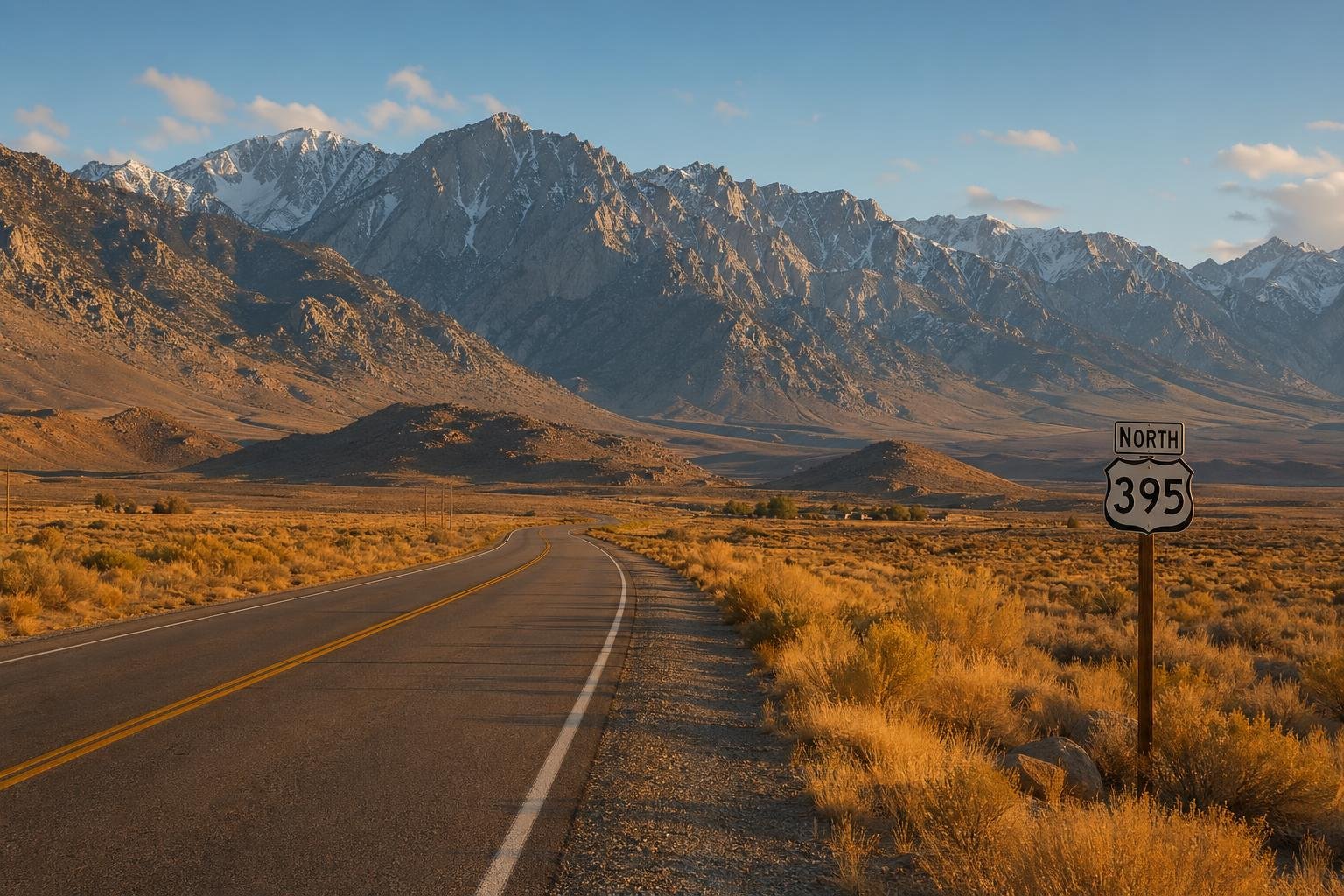
Most people take I-15 South through Idaho and into Nevada, then cut west on US-395 along the Eastern Sierra. This route keeps you in stunning scenery the whole way—sagebrush plains, volcanic tablelands, eventually those jagged peaks rising up as you approach the Owens Valley. The alternative goes through Salt Lake City and across the Nevada interior on I-80, which is faster but far less interesting unless you’re deeply into highway hypnosis.
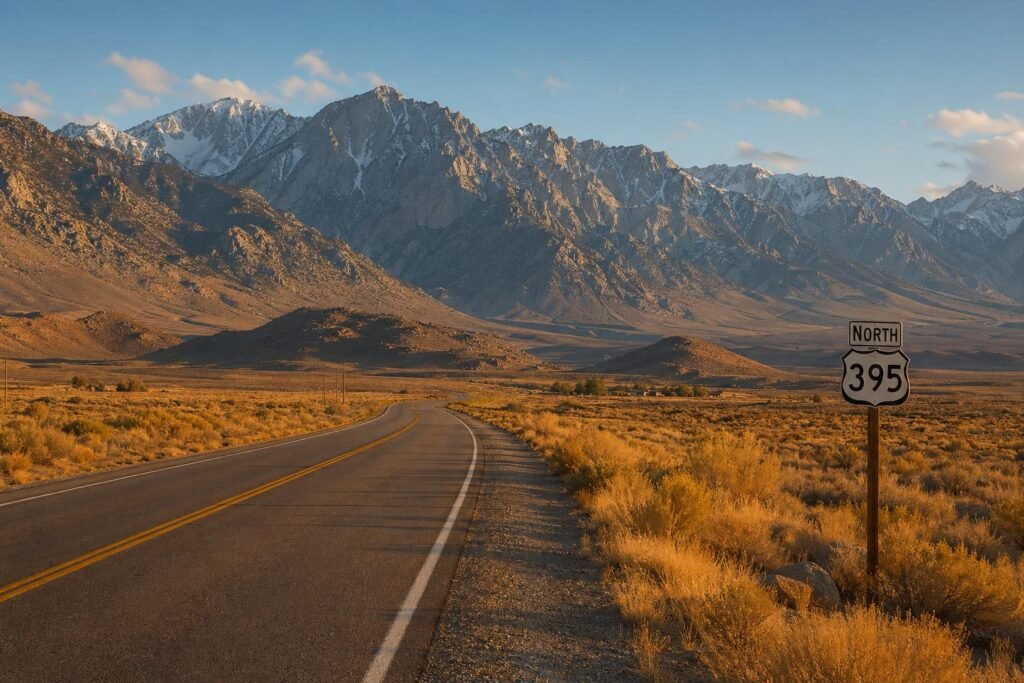
Empty two-lane highway cutting through high desert with the Sierra Nevada mountains rising sharply in the distance, autumn grasses glowing amber along the roadside
Timing matters more than you’d think. In winter, Tioga Pass—the high entrance to Yosemite—is closed, usually from November through late May. That means you’d have to drive all the way around to the western entrances, adding hours. Summer weekends see heavy traffic on 395, especially near Mammoth Lakes.
I’ve done this drive twice, and both times I split it over two days. Reno makes a logical halfway point if you want a proper bed and decent food. But the better call is an overnight in Mammoth Lakes or Bishop—small mountain towns on 395 that put you just 90 minutes from Yosemite’s east entrance. You wake up fresh, hit Tioga Road early, and enter the park when light is actually good for photos.
One warning: gas stations get sparse once you leave the interstate. Fill up in Reno or any town along 395. Running on fumes through the Mono Basin is not the adventure you want.
Comparing the Icons: What Makes Each Park Unique
Yellowstone sprawls across 2.2 million acres of geothermal chaos. You go there for Old Faithful erupting on schedule, for Grand Prismatic Spring looking like someone spilled a rainbow, for bison blocking the road because they own the place. The landscape is volcanic, restless, still very much alive. Steam rises from hillsides. Mud pots burble. It smells faintly of sulfur in half the parking lots.
Yosemite is all about granite verticality compressed into a smaller space. The park covers about 750,000 acres, but everyone obsesses over Yosemite Valley—seven square miles of sheer walls, waterfalls dropping a thousand feet, and El Capitan rising 3,000 feet of solid rock. It’s not geologically active in the dramatic sense. It’s the aftermath of glaciers carving through granite, leaving behind these absurdly photogenic monuments.
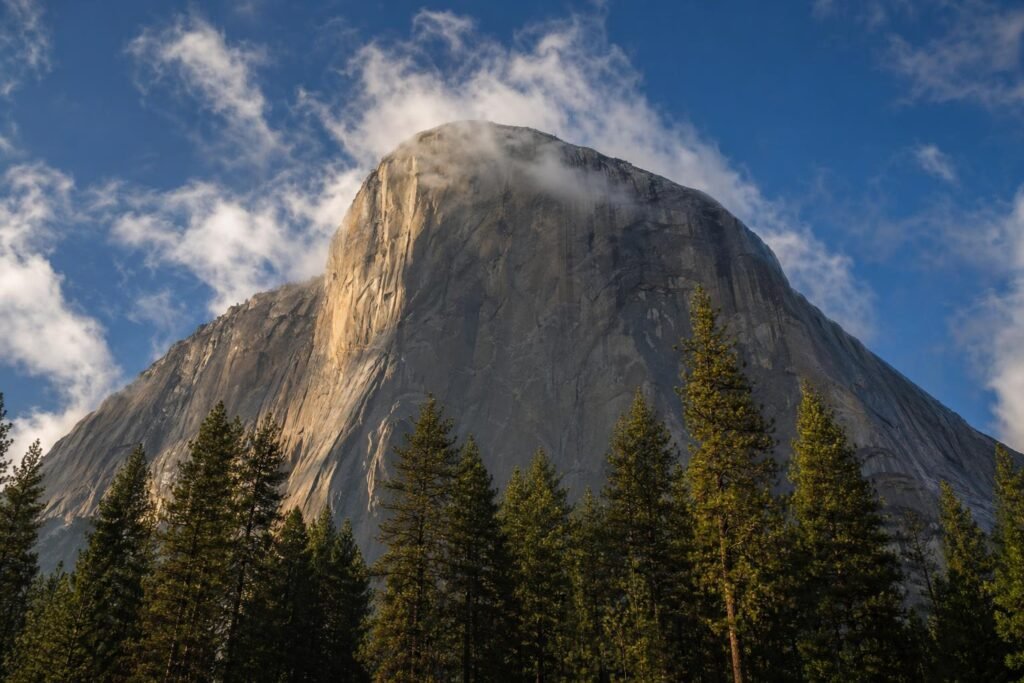
Looking straight up at Half Dome’s northwest face with ponderosa pines framing the bottom third, clouds catching on the granite dome’s peak
Wildlife encounters define Yellowstone. Grizzlies, wolves, elk herds in the Lamar Valley at dawn. You bring binoculars and actually use them. Yosemite has black bears and mule deer, but you’re not going there for a wildlife safari. You’re going to stand at the base of a rock face and feel small.
The crowds concentrate differently too. Yellowstone spreads people across a massive loop road with multiple geyser basins and thermal areas. You can find solitude if you’re willing to walk a mile from parking. Yosemite funnels everyone into the valley, especially April through October. That seven square miles can feel like Disneyland on summer weekends. But hike up to the high country—anywhere above 8,000 feet—and you’ll have granite slabs and alpine lakes mostly to yourself.
Water behaves differently at each park. Yellowstone’s rivers are known for fishing and for their role in the geothermal system. Yosemite’s waterfalls are the main event—Yosemite Falls drops 2,425 feet in three sections, though by August it’s often just a damp streak. Timing your Yosemite trip for May or June means waterfalls at peak flow, which completely changes the experience.
Getting Oriented: Your First Day in Yosemite After Yellowstone
The scale hits you differently. Yellowstone sprawls across 2.2 million acres—you could drive for hours between features. Yosemite Valley? Seven miles long, one mile wide, and every jaw-dropping thing is right there.
I made the mistake of treating it like Yellowstone my first visit. Drove straight to Tunnel View at sunrise, snapped photos, then spent two hours figuring out where to actually park down in the valley. Here’s what works better: get to the valley floor early (before 9am May through September), claim a spot at Curry Village or the main day-use lot near Yosemite Village, then leave your car there. The free shuttle system runs every 10-20 minutes and hits all the main stops—El Capitan, Yosemite Falls, Half Dome Village. In Yellowstone you’re always calculating drive times. Here, you’re calculating which shuttle stop.
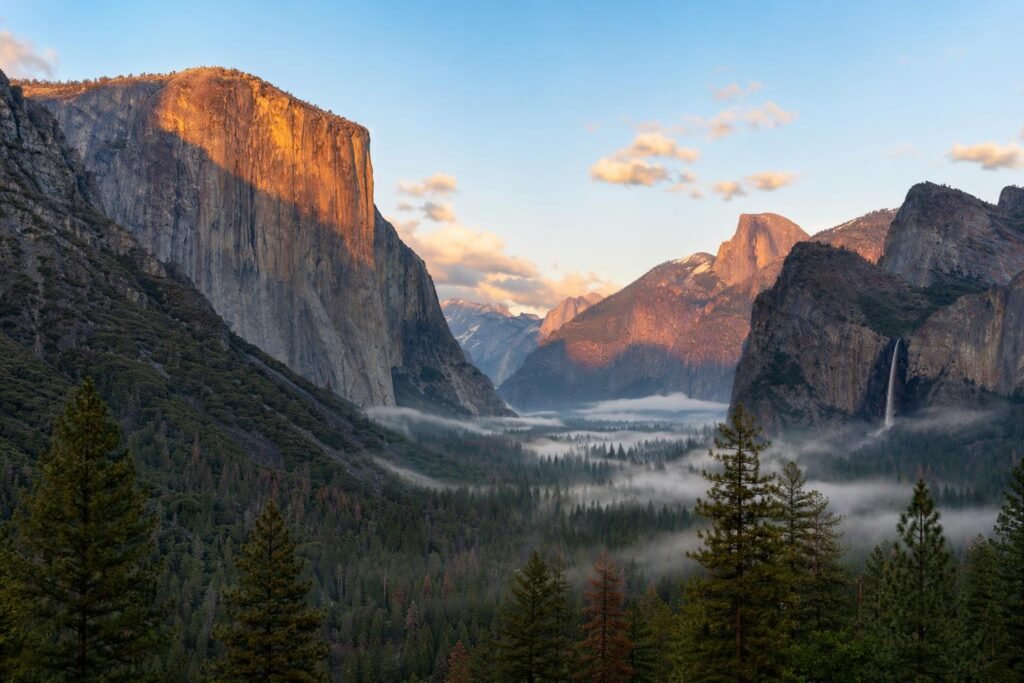
El Capitan’s granite face and Half Dome rising above the valley floor with scattered pines in the foreground, light mist still hanging low.
Most people arriving from Yellowstone want the same thing: context. What am I actually looking at? I ended up booking a small-group orientation tour that picked up from Curry Village because I was tired of squinting at trail maps. ↗ Yosemite Valley Orientation Tour The guide drove an eco-van, stopped at El Capitan for 20 minutes of actual geology explanation—why it looks nothing like Wyoming’s peaks—then dropped us with five hours to wander on our own. Cost less than I spent on gas driving loops in Yellowstone.
Your Yellowstone instincts will tell you to cover ground. Fight that. Pick two things for day one: maybe Lower Yosemite Fall (easy 1-mile loop) and the base of El Capitan. Sit there for 30 minutes. Watch climbers through binoculars if it’s summer. The patience you used waiting for Old Faithful? Same energy, different application.
One practical thing nobody mentions: Yosemite’s restrooms and visitor facilities cluster in the village area. In Yellowstone, you had pullouts every few miles. Here, know where your nearest shuttle stop is or you’ll be hiking back a mile when you just need a bathroom.
Wildlife and Geothermal vs. Granite and Waterfalls: Adjusting Your Expectations
You spent Yellowstone mornings glassing for bears, afternoons timing geyser eruptions. Yosemite doesn’t work that way, and trying to force it into that pattern kills the experience.
The wildlife exists—black bears, mule deer, coyotes—but you’re not going to see a grizzly lumbering across a meadow at dawn. I saw exactly three deer in four days, all in the evening near Ahwahnee Meadow. The focus here is vertical, not horizontal. You’re looking up at 3,000-foot granite walls, not scanning distant treelines. That mental shift took me until day two.
⚠ Failed to fetch
Hikers tiny against the sheer granite cliff face beside Yosemite Falls, showing the actual scale of the rock in a way your eye can’t quite process from the valley floor.
Photography changes completely. In Yellowstone, you’re shooting with long lenses at dawn—400mm on bison, 600mm on wolves if you’re lucky. Yosemite needs wide glass and a tripod. I used a 16-35mm more than my 70-200mm. The waterfalls photograph best mid-morning when light hits the spray (10am-noon for Yosemite Falls in May and June). El Capitan needs afternoon side light to show texture—around 4-6pm depending on season. Yellowstone taught you golden hour; Yosemite teaches you to read granite.
The geothermal spectacle you got used to? Gone. No sulfur smell, no bubbling mud, no thermal features at all. What you get instead is water moving in ways that shouldn’t be possible. Yosemite Falls drops 2,425 feet in three sections. In May, it’s thunderous—you feel it in your chest from 200 yards away. By August, it’s often dry. Nevada Fall, Vernal Fall, Bridalveil—they’re all snowmelt-dependent. Yellowstone’s features perform year-round. Yosemite’s waterfalls have a season, and if you’re coming in late summer after Yellowstone, you might catch them at a trickle.
The patience is different too. You don’t wait for something to happen. You wait for light to change on something that’s been there for millennia. I watched El Capitan for an hour one evening, just sitting on a boulder near the Merced River. The granite went from white to pink to deep orange as the sun dropped. No geyser erupted. No elk bugled. And somehow it felt just as wild.
Hiking Adventures: From Yellowstone’s Thermal Trails to Yosemite’s High Country
If you loved hiking in Yellowstone, Yosemite will feel familiar in spirit but totally different underfoot. Yellowstone’s backcountry spreads wide and rolling—think big meadows, geysers steaming in the distance, maybe a bison crossing your path. Yosemite goes vertical. The trails climb. Hard.
The elevation thing catches people off guard. Yellowstone sits around 7,500 feet at the rim, but most hiking stays relatively gentle. Yosemite Valley starts at 4,000 feet, then the trails shoot up granite walls—Half Dome gains 4,800 feet, Clouds Rest nearly 2,300. Your lungs notice.
⚠ Failed to fetch
Steep switchbacks cutting up through granite slabs with cathedral peaks rising in the distance, a single hiker’s silhouette mid-climb against pale rock
Start with something like Vernal Fall via the Mist Trail—it’s 3 miles round trip, punchy elevation, and you’ll be soaked from spray by the top. If you handled Artist Point to Uncle Tom’s Trail in Yellowstone without issue, you’re ready. But if you want to really get into Yosemite’s high country—the alpine lakes, Cathedral Range, those views that don’t make it onto shuttle bus routes—going with someone who knows the terrain makes sense. I ended up booking a private hike through the High Country Explorer tour because I wanted to hit trails above 9,000 feet without second-guessing every unsigned junction. Guide knew which snowmelt crossings were sketchy in June, which wasn’t obvious from a map. ↗ High Country Explorer Private Hiking Tour
Yellowstone rewards patience and distance. You might hike 10 miles and see thermal features, a waterfall, elk in a meadow. Yosemite rewards effort and elevation. You climb 2,000 feet and suddenly you’re looking down at the Valley from a granite throne. Different endorphins, same addiction.
One more thing: Yosemite’s free shuttles make trailhead logistics stupid easy. In Yellowstone you’re driving everywhere. Here, hop off at Happy Isles, hike up to Nevada Fall, catch the shuttle back. No car shuffling.
Seasonal Strategies: Best Times to Visit Both Parks
Trying to hit both parks in one trip? Your calendar matters more than you think. These places operate on totally different seasonal rhythms.
May through early June is Yosemite’s secret weapon—waterfalls are raging from snowmelt, dogwoods bloom in the Valley, and Tioga Road usually opens late May. Yellowstone’s still half-frozen. Roads don’t fully open until late April, and you’ll likely hit snow at higher elevations into June. If you’re doing both, start Yosemite then move to Yellowstone as summer arrives.
July and August—peak madness at both. Yellowstone gets 900,000 visitors in July alone. Yosemite Valley turns into a parking nightmare. But the weather’s reliable, all roads and facilities are open, and yeah, it’s crowded but it’s crowded because everything’s accessible. If you’re locked into summer travel, book accommodation six months out. Not exaggerating.
⚠ Failed to fetch
Half Dome and granite cliffs glowing amber under autumn sun with the Merced River reflecting fall colors, scattered visitors walking paths below
September’s the move. Yellowstone crowds thin after Labor Day but weather’s still solid—daytime highs in the 60s, aspens turning gold around Mammoth. Yosemite’s even better: waterfalls are down to trickles (trade-off), but temps are perfect for hiking, the Valley’s less packed, and you get those crisp fall mornings with mist rising off the Merced. I’d pick mid-September every time if I could.
October through April—different beasts entirely. Yellowstone basically shuts down for cars in winter; you’re looking at snowcoach or cross-country ski access only, which is incredible if that’s your thing. Yosemite stays open year-round in the Valley, and winter’s genuinely beautiful—waterfalls freeze into ice sculptures, way fewer people—but Tioga and Glacier Point Road close, cutting off half the park.
One logistical note: if you’re chaining both parks together, you’re looking at roughly 900 miles of driving between them. That’s two long days or three comfortable ones. Factor it in when you’re calculating how many days you actually have on the ground in each park. Most people underestimate that stretch.
Accommodation and Logistics: Planning Your Multi-Park Adventure
Book your Yellowstone lodging exactly 13 months in advance. Not 12, not 14. That’s when reservations open at Old Faithful Inn and Lake Yellowstone Hotel, and they vanish within hours for summer dates.
Yosemite’s different. The Ahwahnee and Curry Village open reservations on the 15th of each month for dates exactly one year out. I set a phone alarm for 7am Pacific. My first attempt? Went straight to Half Dome Village (the new name for Curry Village) instead of fighting for Ahwahnee rooms at $500+ per night.
The smarter play is camping if you can handle it. Madison Campground in Yellowstone puts you 16 miles from Old Faithful with elk wandering through at dawn. Upper Pines in Yosemite Valley means you’re walking to Mirror Lake before most tour buses arrive. Both take reservations six months ahead at recreation.gov.
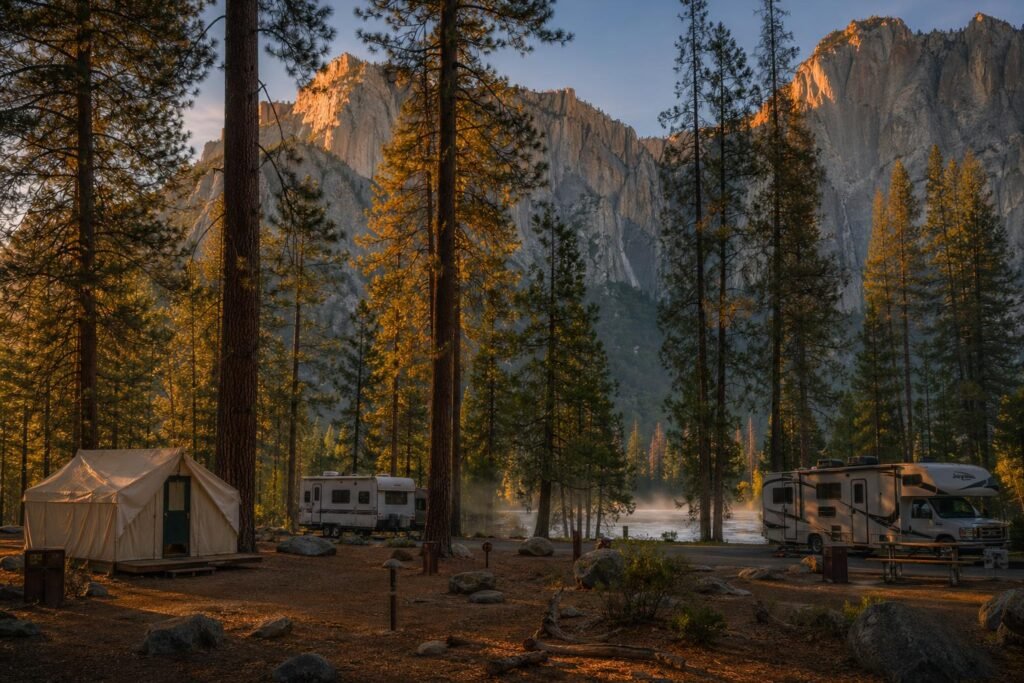
Canvas tents and RVs scattered beneath towering granite walls still touched by alpenglow, morning mist rising from the Merced River visible through the trees
Lodging outside the parks gives you flexibility. West Yellowstone, Montana has dozens of motels 15 minutes from the west entrance. Mariposa, California sits 45 minutes from Yosemite’s Arch Rock entrance with prices half what you’d pay in the valley.
The road trip between them is 900 miles if you go through Reno, 1,100 if you route through Salt Lake City. I did Salt Lake because I wanted to break it up at Park City, which added one expensive but worthwhile night. Figure two full driving days minimum, three if you want to actually enjoy the stops.
Don’t try to do both parks in one week unless you like spending three days in a car. Give Yellowstone four full days, Yosemite three, then add your driving time. Or pick one and actually see it.
The logistics everyone underestimates: gas up before entering either park. Yellowstone’s stations charge $1+ more per gallon. There’s no gas in Yosemite Valley at all. And cell service is essentially decorative in both places—download offline maps before you arrive.
Making the Most of Both Experiences: Sample Itineraries and Pro Tips
Here’s the three-day Yellowstone hit list: Day one, drive the lower loop hitting Grand Prismatic before 9am when the crowds arrive, then Old Faithful and Yellowstone Lake. Day two, Lamar Valley at dawn for wolves and bison, then up to Mammoth Hot Springs in the afternoon. Day three, Grand Canyon of the Yellowstone in morning light, then Artist Point and the drive back south through Hayden Valley.
That itinerary covers maybe 40% of the park. Which tells you something about three days.
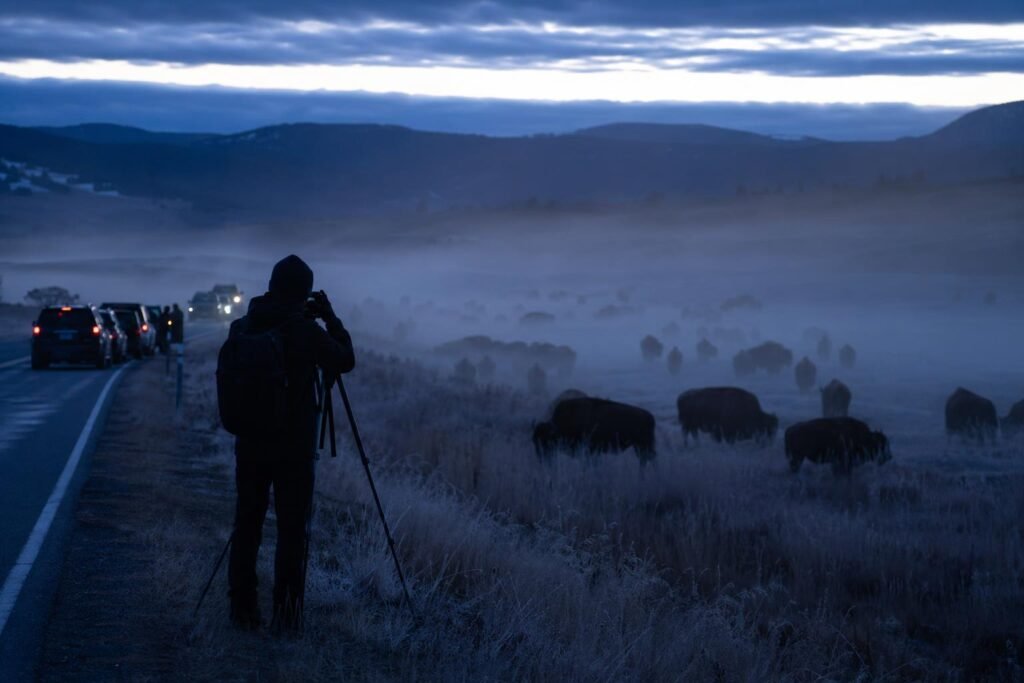
A lone photographer in silhouette standing roadside with tripod aimed at a massive bison herd moving through fog, other cars pulled over in background
Five days in Yellowstone lets you breathe. Add the Norris Geyser Basin, hike to Fairy Falls behind Grand Prismatic, and spend a sunset at Lake Butte Overlook where you’ll see maybe four other people. Rangers I talked to said most visitors never make it to the northeast entrance road past Tower Fall, which means you should absolutely drive it.
Yosemite’s three-day version: Day one, valley floor circuit hitting Tunnel View, Bridalveil Fall, then the Mirror Lake loop before lunch. Afternoon at Yosemite Falls if it’s running (dry by August most years). Day two, drive up to Glacier Point for sunrise, then Mariposa Grove of giant sequoias in the afternoon. Day three, Tuolumne Meadows if Tioga Road is open, otherwise spend it climbing the Mist Trail to Vernal Fall.
The pro move in Yosemite is getting to trailheads by 6:30am. I watched the Mist Trail go from 12 people to 200+ between 7am and 10am on a June Wednesday. The granite warms up fast too—by noon you’re hiking in an oven.
Week-long at either park means you can actually relax. In Yellowstone, do a backpacking permit to Heart Lake or Shoshone Lake. In Yosemite, hike up to Clouds Rest or spend a day in Hetch Hetchy, which 90% of visitors skip entirely because it’s an hour drive from the valley.
The ranger tip that changed how I see both parks: pick one feature and watch it for an hour. Not photographing, not checking your phone. Just sitting with Old Faithful or sitting with El Capitan. Most people see these places through a windshield or a camera screen and wonder why they didn’t feel moved.
And here’s what nobody tells you: both parks are worse in peak summer. Yellowstone in September after Labor Day has rutting elk bugling at dawn and half the crowds. Yosemite in May has thundering waterfalls and actual parking spaces. The “best” time isn’t July.