

Travelers seeking convenient accommodations near Yosemite’s entrances to minimize drive time and maximize their park experience.
Why Staying Close to Yosemite Makes All the Difference
I’ve driven into Yosemite at 10 AM on a summer Saturday, and I’ve driven in at 5:45 AM on a Tuesday in October. The difference isn’t just traffic—it’s your entire day.
When you’re close to an entrance, you’re on the trail by 6:30 AM, when Half Dome still has that alpenglow and the Mist Trail isn’t a conga line yet. You can duck out for lunch if the midday crowds get insane, then return for golden hour without burning two hours on Highway 140.
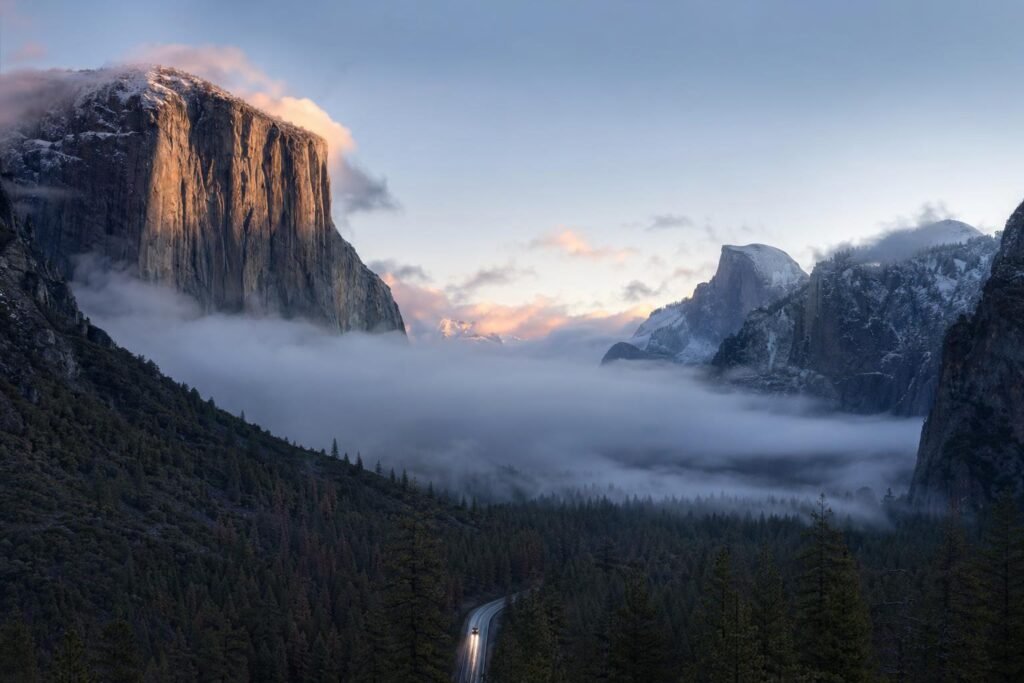
El Capitan and Half Dome emerge from lifting valley fog, with a single car’s headlights on the empty road below.
The reality is that Yosemite’s entrances aren’t exactly suburban. From Fresno, you’re looking at 90 minutes minimum to the South entrance. From the Bay Area via Highway 120, it’s three and a half hours if you’re lucky. Stay in Mariposa and you’ve just bought yourself an extra hour of sleep or an extra waterfall.
And here’s what nobody mentions: when you’re exhausted at 7 PM after 20,000 steps and a scramble up to Nevada Fall, a 15-minute drive back to your room sounds a hell of a lot better than 75 minutes. I’ve done both. One ends with you collapsed in bed. The other ends with you white-knuckling through mountain switchbacks half-asleep.
Hotels Within Yosemite Valley: The Ultimate Convenience
There are exactly three places to stay inside Yosemite Valley, and all of them book up months ahead for summer. But if you can snag one, you’re essentially living inside a postcard.
The Ahwahnee is the heavyweight—built in 1927, stone and timber, the kind of place where Ansel Adams used to hang out in the bar. Rooms run $500-900 depending on season, but you’re a five-minute walk from the base of Yosemite Falls. I had dinner there once and watched climbers’ headlamps slowly ascending El Capitan through the dining room windows at dusk.
Yosemite Valley Lodge is the practical middle ground. Around $250-400, basic rooms, but the location is unbeatable—right across from Yosemite Falls, walking distance to shuttle stops. My buddy stayed here last June and was on the trail to Mirror Lake before the parking lots even opened.
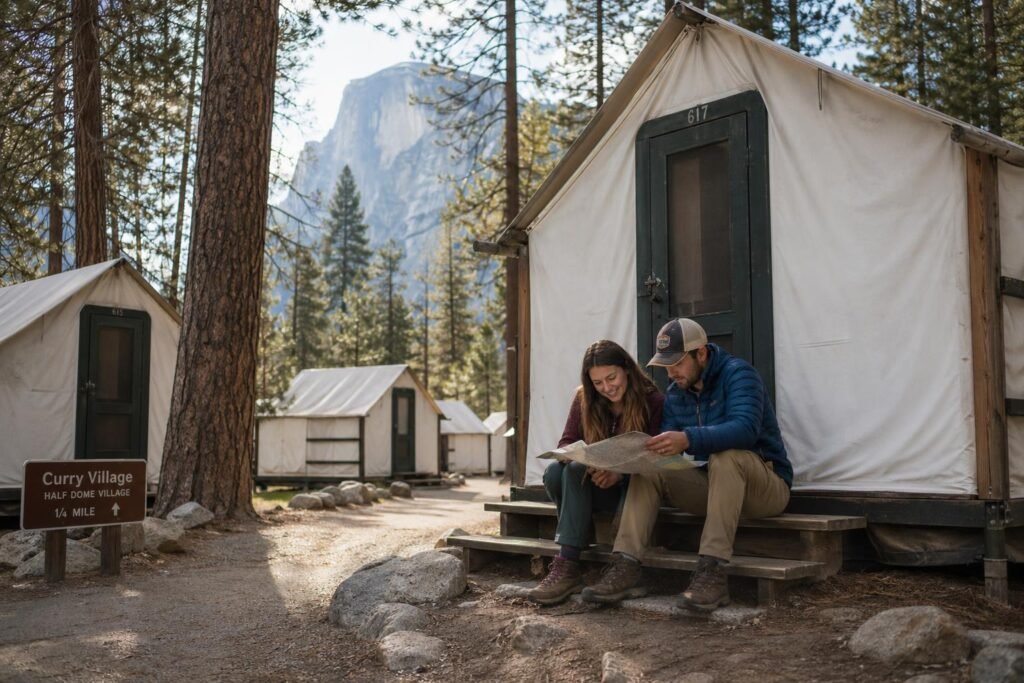
Canvas tent cabins with wooden frames nestle among towering pines, with a couple in hiking boots sitting on their cabin steps studying a trail map.
Curry Village is where I actually stayed my first trip—heated tent cabins starting around $150, or hard-sided cabins if you want walls. It’s more summer camp than hotel, but you wake up to stellar jays screaming and you’re at the Happy Isles trailhead in ten minutes. Most people here go with the tent cabins because they’re weirdly charming and you’re barely in your room anyway. ↗ Yosemite Valley Lodge
The only catch: all three are managed by the same concessionaire, and their booking site crashes on the regular. Set calendar reminders for exactly one year out if you want July or August.
El Portal and Highway 140 West Entrance: Closest Gateway Towns
El Portal sits right at Yosemite’s doorstep—literally. The Arch Rock entrance is maybe 15 minutes away, and you’re in the Valley proper within 30 minutes. This unincorporated stretch along the Merced River doesn’t have much besides a handful of lodges, but that’s exactly why it works.
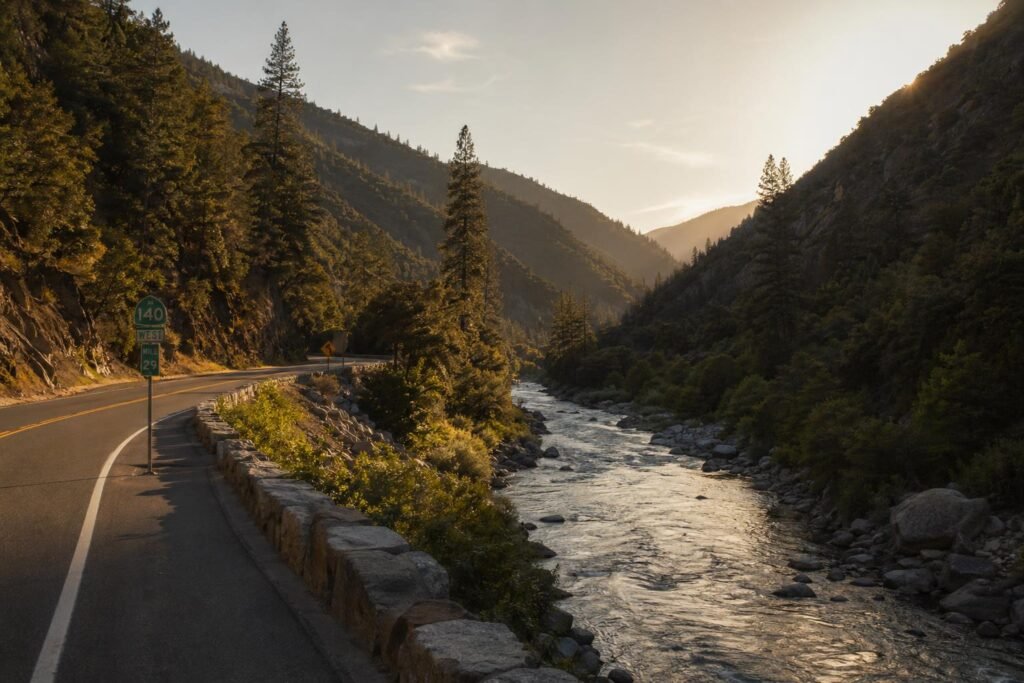
A two-lane road curves alongside the Merced River with pine-covered slopes rising steeply on both sides, late afternoon light catching the water
Cedar Lodge is the big player here—122 rooms spread across a hillside property that feels more functional than charming. Rooms run $180-$280 depending on season, and there’s a decent restaurant on-site, which matters because your dinner options are limited to here or a 30-minute drive. The pool’s open summer only. I ended up using Booking.com for this place last June because they had a flexible cancellation policy when weather looked iffy ↗ Booking.com.
Yosemite View Lodge, just up the road, puts you even closer—about 10 minutes from the Arch Rock entrance. All 335 rooms have kitchenettes, some face the river. It’s a bit sterile but functional, $200-$350 range. Indoor and outdoor pools, which my kids appreciated after a day hiking Vernal Fall.
The real win with El Portal is morning logistics. You can leave your hotel at 7 AM and be parked at Curry Village or Yosemite Falls by 7:45, before the Valley gets jammed. Coming back after sunset? You’re home by 9 PM, not midnight.
One thing: both these lodges book solid for summer weekends by February. Winter’s easier, and honestly, the drive along 140 with snow on the canyon walls is spectacular.
Mariposa Area: Budget-Friendly Options Near the South Entrance
Mariposa is where you go when everything closer is full or your budget won’t stretch to $300/night. It’s a proper small town—5,000 people, grocery stores, gas stations, taco trucks on the courthouse lawn Friday nights. The drive to Yosemite Valley is 43 miles via Highway 140, about 75 minutes in summer traffic.
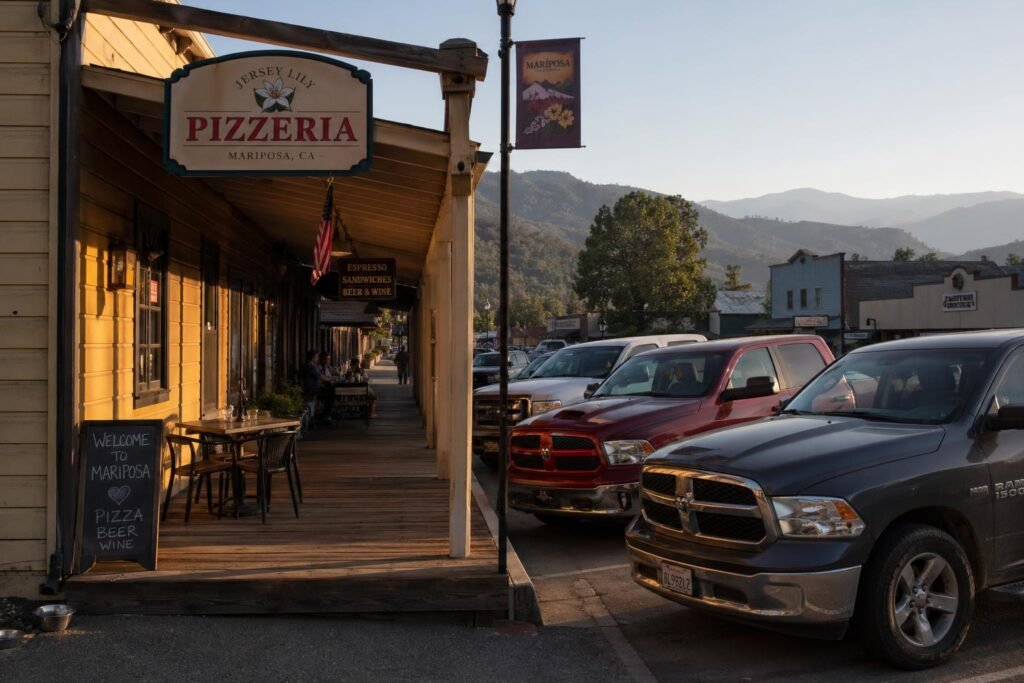
A single-story Western-style building with a covered wooden sidewalk, pickup trucks parked diagonally, the Sierra foothills hazy in the background
The hotel lineup here is mostly chains. Best Western Plus Yosemite Way Station runs $140-$200 and does the job—clean, breakfast included, outdoor pool. Comfort Inn Yosemite Valley Gateway is similar pricing, slightly newer property. Both sit on Highway 140 on the north side of town, so you save maybe five minutes versus staying downtown.
I’ve stayed at the Mariposa Lodge, an older independent spot with 45 rooms for $110-$160. It’s dated—popcorn ceilings, thin walls—but the owner keeps it clean and the parking’s easy. There’s a mini-mart next door that opens at 6 AM for coffee and breakfast burritos.
The real advantage here is flexibility. You can find a room in Mariposa on 48 hours’ notice even in peak July. And after three days of hiking, sometimes you just want a Safeway where you can buy a rotisserie chicken and eat it in your room.
Downsides are obvious. That 75-minute drive each way adds 2.5 hours to your day. If you’re doing Glacier Point or Mariposa Grove, it’s more. But if your Yosemite budget is tight and you’re okay with early mornings, Mariposa works fine.
Groveland and Highway 120 West: Quick Access to Big Oak Flat Entrance
Groveland sits about 25 miles from the Big Oak Flat entrance, which makes it one of the better staging points if you’re planning to hit Tuolumne Meadows or the high country. The drive in takes maybe 45 minutes without traffic, though summer weekends can stretch that.
Most people stay here because it’s cheaper than anything inside the park and still gets you in early. The town itself is tiny—basically one main street with a few restaurants and a general store that closes by 8 PM.
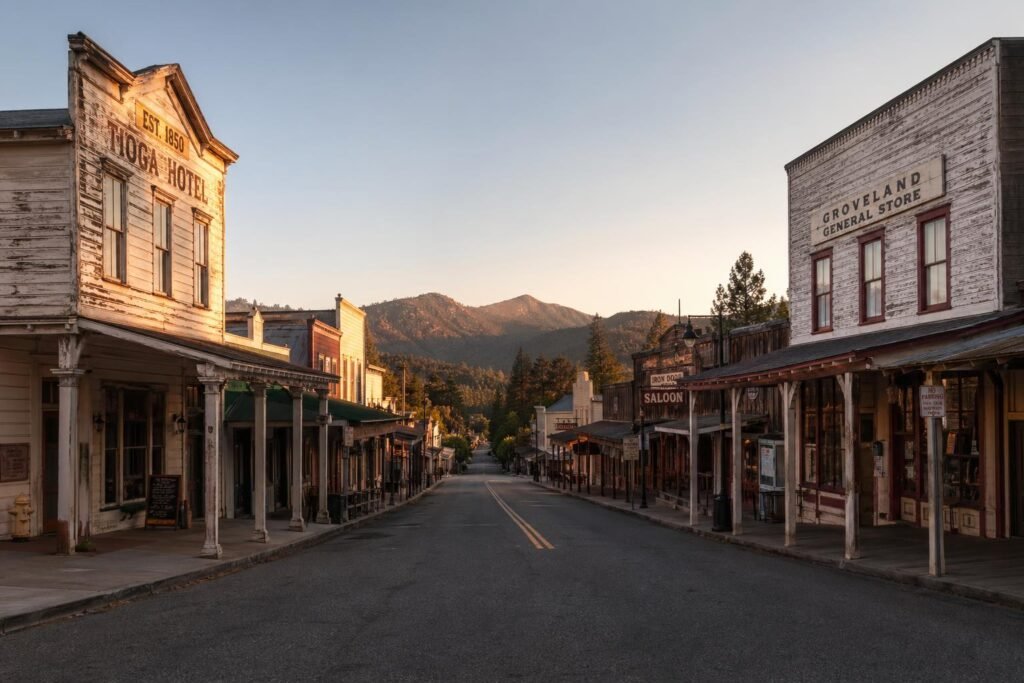
Weathered wooden storefronts with covered porches line an empty two-lane road, mountains visible at the far end, warm light hitting peeling paint
The Hotel Charlotte is the old-timer here, built in 1921. Rooms are small and creaky but clean, around $130-160 depending on season. No AC, which matters in July. I ended up using Vrbo last time because I wanted a full kitchen and found a cabin just outside town for about the same price—made breakfast way easier before the early park entry ↗ Vrbo.
Rush Creek Lodge is the fancier option if you’re willing to pay $300+. It opened in 2016 with a pool, hot tubs, and a tavern that actually has decent food. Kids love it. I don’t love the price, but if you’re doing the park with family and need amenities at the end of a long day, it delivers.
The Groveland Hotel is the mid-range pick—around $180-220, historic building, some rooms have clawfoot tubs. Their restaurant is hit or miss. I’d eat at Provisions down the street instead.
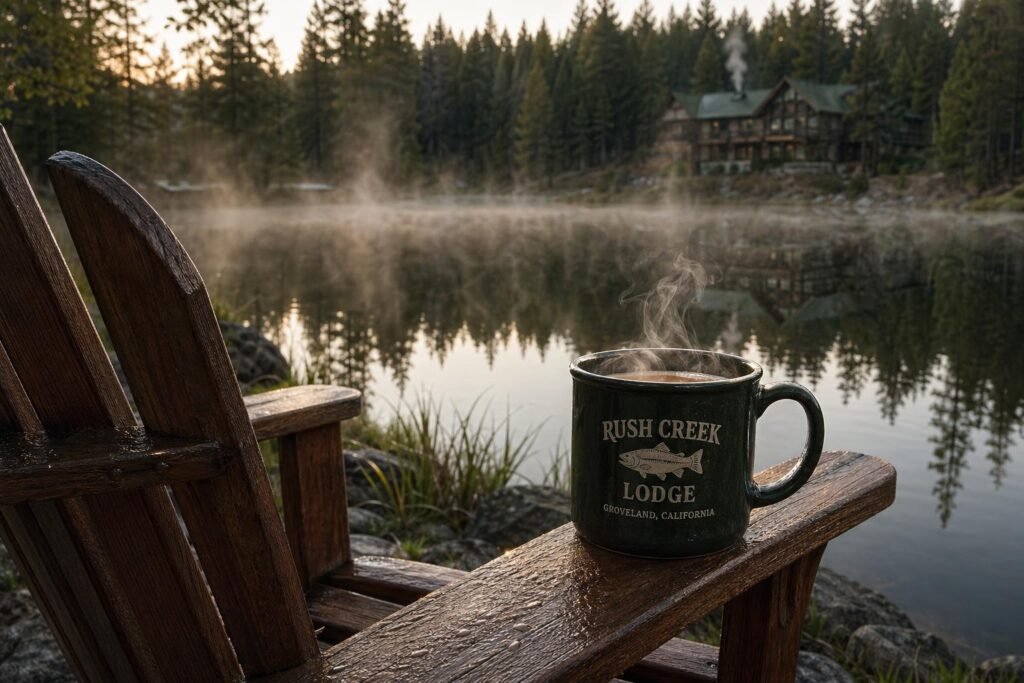
Adirondack chairs facing a still pond with pine forest reflected in water, steam rising from coffee mug on armrest
One thing: if you’re entering through Big Oak Flat, you’re about 45 minutes from Yosemite Valley once you’re inside the gate. It’s not the closest entrance for Valley access—that’s El Portal or Mariposa. But for Tuolumne and high-elevation stuff, this is your spot.
Oakhurst and Fish Camp: Southern Gateway with Chain Hotels
The Highway 41 approach from the south is where you find actual chain hotels—Hampton Inn, Best Western, Comfort Inn. All clustered around Oakhurst, which is about 14 miles from the park’s south entrance. Fish Camp is closer at 2 miles out, basically right at the gate.
Oakhurst is a real town with grocery stores, gas stations, and a Starbucks. If you need to stock a cooler or grab forgotten sunscreen, this is where you do it. The hotels here run $150-250 depending on brand and season.
I’ve stayed at the Hampton Inn & Suites Oakhurst twice. Nothing exciting, but the breakfast is decent and the beds are fine. It’s about a 35-minute drive to the Valley once you’re through the entrance station. You’ll pass the Mariposa Grove turnoff on your way in—definitely stop if you haven’t seen the giant sequoias yet.
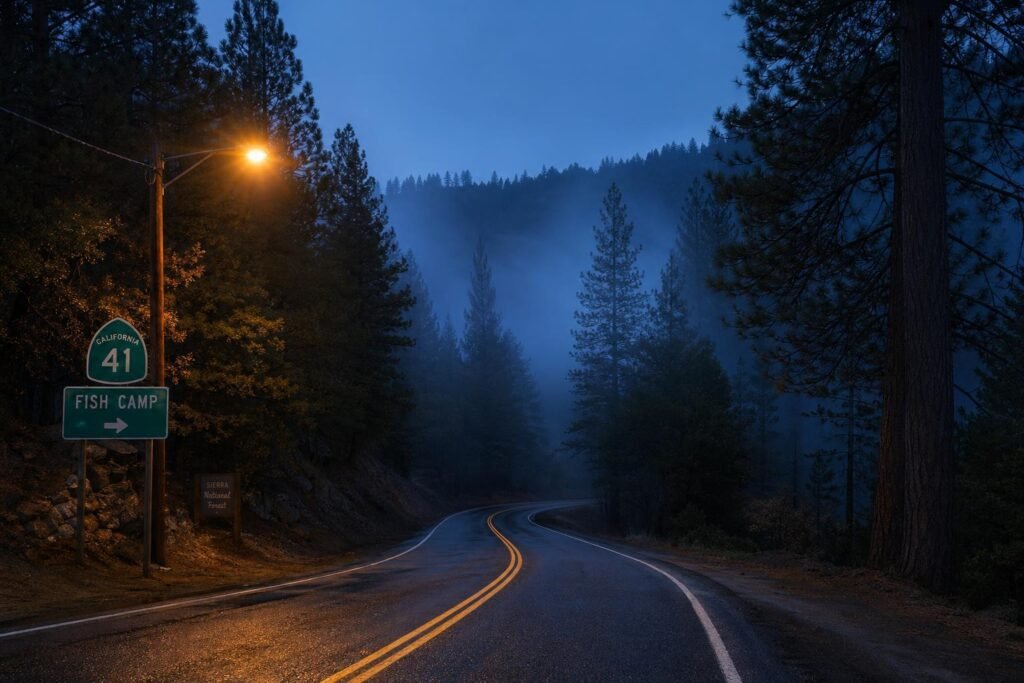
Two-lane mountain road curves through tall pines disappearing into mist, yellow center line glowing under last streetlight before forest
Fish Camp has a few options right at the park boundary. Tenaya Lodge is the big resort here—spa, multiple restaurants, huge pool complex. Rooms start around $350 and go up from there. It’s nice if that’s your style, but I’d rather save the money and put it toward an extra night somewhere.
The Narrow Gauge Inn is the alternative in Fish Camp—more rustic, around $180-220. The restaurant has a stone fireplace and pours decent wine. Rooms are dated but clean. You’re literally two miles from the entrance, so morning starts are easy.
One advantage of this entrance: Glacier Point Road branches off about 15 miles in. If you’re here in summer and want to catch sunset from Glacier Point, you can be back at your Oakhurst hotel by 10 PM. From other entrances, that’s a much longer loop.
The south entrance also gets you closest to Wawona and the historic hotel there, though Wawona itself only has that one lodging option. Most people use Oakhurst or Fish Camp as a base and day-trip into Wawona and the grove.
Lee Vining and Highway 120 East: Summer-Only Tioga Pass Access
Here’s the thing about Tioga Pass: it’s only open maybe June through October, sometimes less. The 9,945-foot crossing gets buried under snow, and suddenly this entire side of the park vanishes from your options.
But when it’s open? Lee Vining becomes your gateway to Tuolumne Meadows, which I think is Yosemite’s most underrated landscape. High alpine instead of valley walls. Fewer people.
The drive from Lee Vining to Tuolumne is about 12 miles—maybe 20 minutes. To the Valley floor, you’re looking at 90 minutes, but you’re trading granite domes for subalpine wildflowers and that massive expanse of meadow at 8,600 feet.
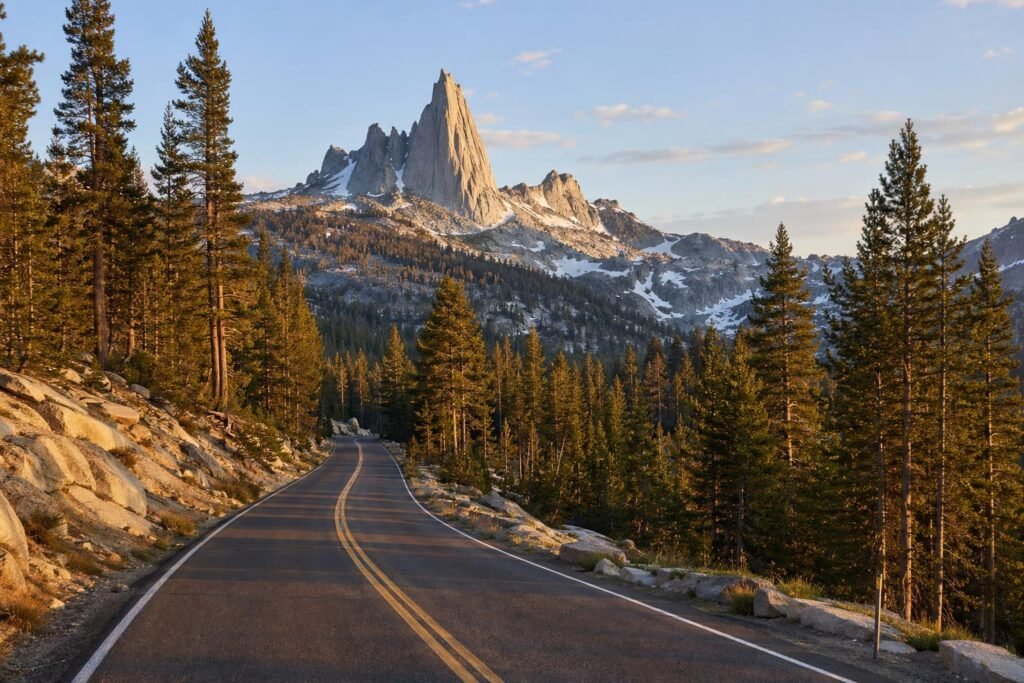
Empty two-lane highway cutting through Jeffrey pine forest with Cathedral Peak’s granite spire rising in the distance, patches of snow still visible on the north-facing slopes
Lee Vining itself is tiny. One main street (Highway 395), maybe a dozen lodging options, several good restaurants. Lake View Lodge runs about $140-180 in summer—clean, nothing fancy, but you can walk to Whoa Nellie Deli for fish tacos that have no business being that good at a gas station.
El Mono Motel is cheaper, more bare-bones. Around $110-140. The Tioga Pass Resort sits right at the park boundary, but books out months ahead and costs more.
The real draw here is Mono Lake, ten minutes north. That alien landscape of tufa towers and brine shrimp feels like another planet. I usually spend an afternoon there before heading into the park—South Tufa area at sunset especially.
One warning: this area gets cold at night even in July. I’m talking 40s. And when Tioga closes (which can happen suddenly with October snow), you’re stuck with a 4-hour drive around to enter from the west. Check road status obsessively if you’re visiting shoulder season.
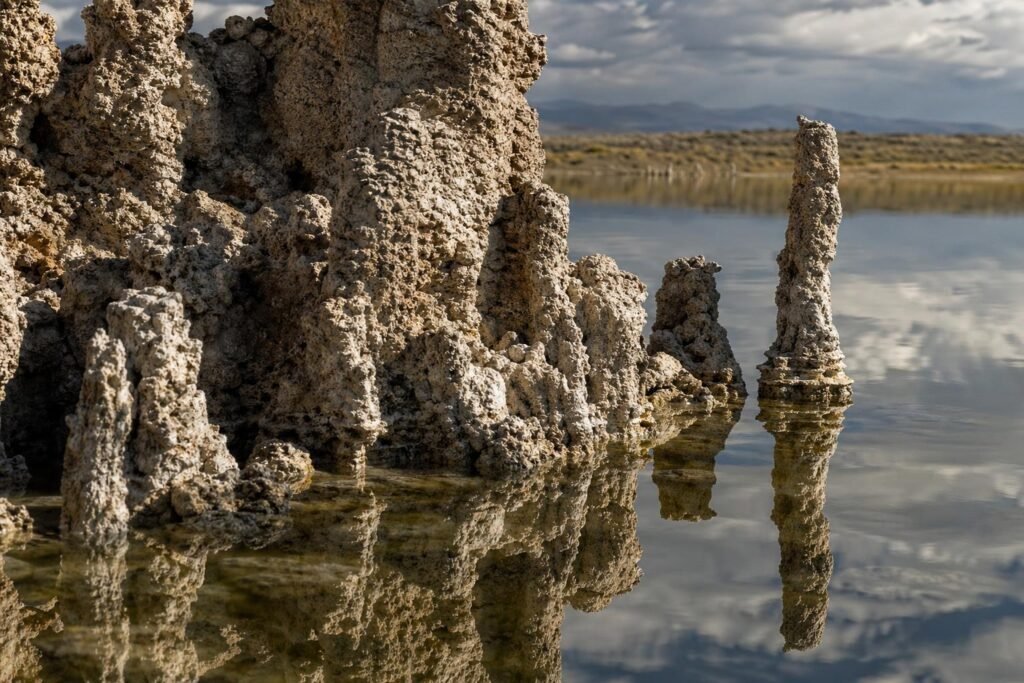
Weathered tufa towers in shallow water creating abstract calcium carbonate formations, Great Basin scrub visible on the far shore, scattered clouds reflected in the still surface
Booking Tips: How to Secure the Closest Accommodations
The lodges inside Yosemite—Ahwahnee, Yosemite Valley Lodge, the others—open their reservations exactly 366 days in advance. Not approximately. Exactly. And for summer weekends, they often book within hours.
I set a phone alarm for 7 AM Pacific, 366 days before my trip. It feels ridiculous until you’re doing it and realize everyone else is too.
For places outside the park, booking windows vary wildly. Most of the chains in Mariposa and Oakhurst use standard hotel systems—90 to 120 days is usually enough for weekdays, but Memorial Day through Labor Day weekends? I’d say 4-5 months minimum.
The small independent spots like Groveland Hotel or Narrow Gauge Inn sometimes take reservations a full year out, sometimes just a few months. Call directly. Their phone systems are often better than their websites, and you might catch a cancellation they haven’t listed yet.
Cancellation policies matter more here than most places. I ended up using Booking.com for a Mariposa stay specifically because they had free cancellation up to 24 hours before. ↗ Booking.com Weather in the park can be unpredictable—a July wildfire closure or surprise October snowstorm might kill your plans. Having flexibility to cancel without penalty saved me once when Glacier Point Road closed unexpectedly.
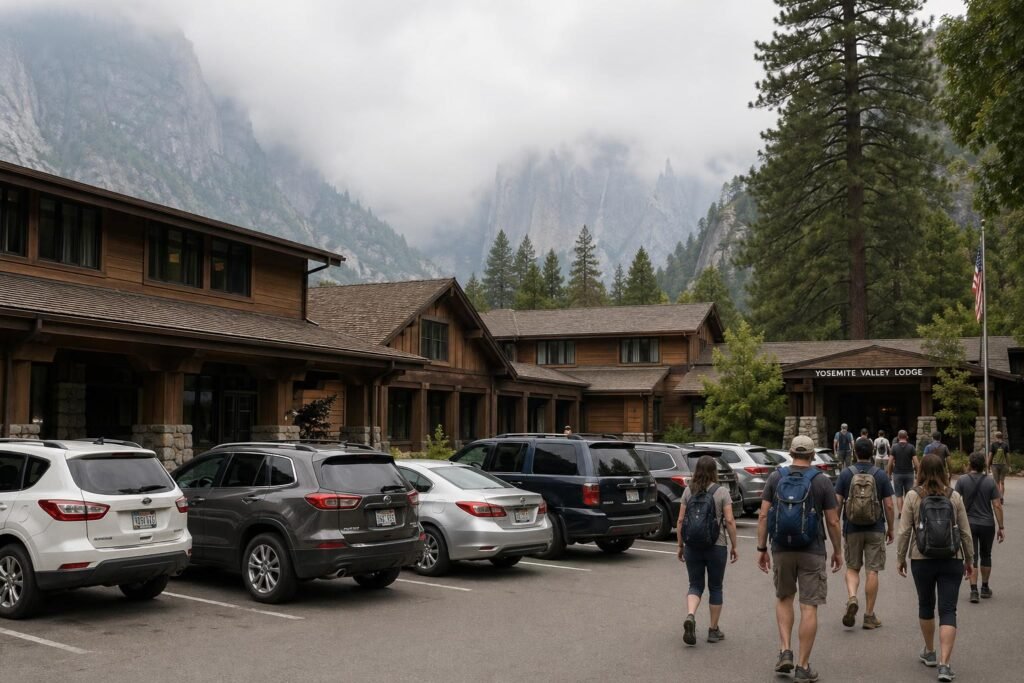
Parked cars in front of low-rise wooden lodge buildings with tourists carrying backpacks walking toward entrance, forest-covered valley walls barely visible through summer haze
Last-minute options exist but require lowered expectations. I’ve found same-week availability in Mariposa at the budget chains—Comfort Inn, Miners Inn—when everything closer was full. You’re just committing to that hour-plus drive each way.
Midweek is exponentially easier than weekends. A random Tuesday in July? You’ll find something within 30 miles with a week’s notice. Saturday night in June? Good luck.
One unconventional approach: book something refundable far out, then check obsessively for cancellations closer in. People’s plans change. I’ve grabbed Yosemite Valley Lodge rooms two weeks before arrival this way. Set up alerts, check morning and evening. It’s tedious but sometimes works.